
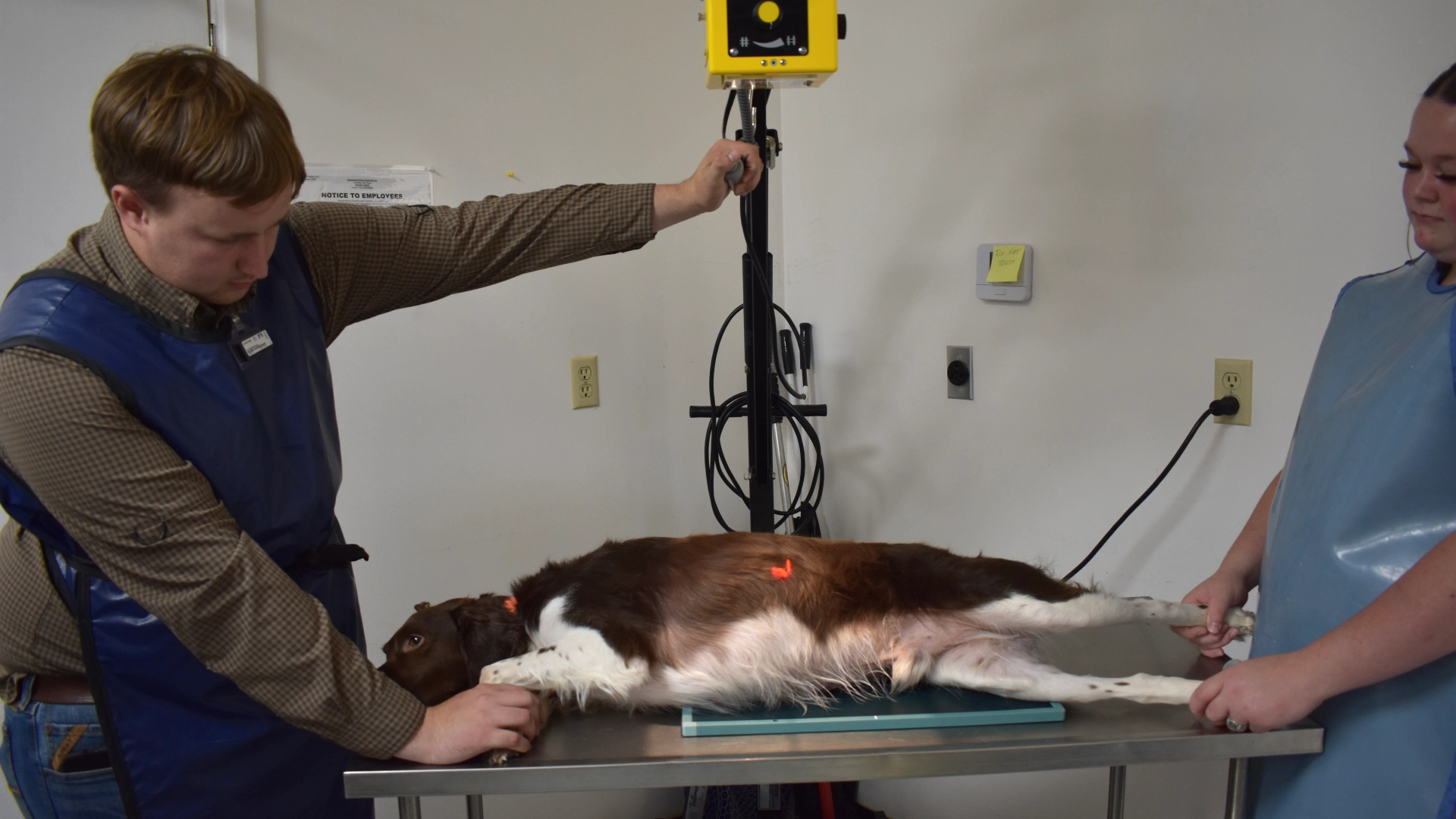
Diagnostics in Sweetwater, TX
Clear answers start with clear imaging and screening for your pet. At Sweetwater Veterinary Hospital, our advanced diagnostic services help us detect, diagnose, and monitor conditions accurately so your pets can receive the timely care they deserve.
Advanced Veterinary Imaging for Better Pet Health
When your pet isn’t feeling their best, a physical exam alone may not provide the full picture. That’s why we offer imaging services, including safe, high-resolution digital X-rays and ultrasounds. These imaging techniques can uncover hidden issues affecting your pet’s health.
Radiology and ultrasonography play a key role in both urgent diagnostics and preventive screenings. Whether we’re identifying a fractured bone, locating a swallowed object, or evaluating a chronic condition, our imaging tools give us the clarity needed to make informed treatment decisions.
Comprehensive Bloodwork
Your pet is a cherished member of your family, and because animals naturally hide signs of illness, health problems can develop long before you notice changes at home. Comprehensive bloodwork gives us a window into your pet’s overall health, allowing us to evaluate important organs such as the liver and kidneys, check blood sugar, assess hydration, identify signs of infection or inflammation, and detect many conditions before they become serious. Whether your pet is here for an annual wellness visit, preparing for a procedure, or simply isn’t acting like themselves, blood testing helps us make informed decisions about their care and gives you peace of mind.
Routine bloodwork is one of the best investments you can make in your pet’s long-term health. By establishing a healthy baseline and monitoring changes over time, we can often identify problems earlier, when treatment is simpler, more effective, and less costly. Our goal is to keep your pet healthy, active, and by your side for as many years as possible. We’ll review every result with you, answer your questions, and work together to create a care plan tailored to your pet’s unique needs.
Electrocardiogram
An electrocardiogram (EKG) is a quick, painless test that measures the electrical activity of your pet’s heart and helps us detect abnormal heart rhythms that may not be heard during a routine examination. If your pet has a heart murmur, episodes of weakness or fainting, difficulty breathing, or is preparing for anesthesia, an EKG can provide valuable information about how their heart is functioning. This simple diagnostic tool allows us to identify rhythm abnormalities early, guide treatment decisions, monitor heart conditions over time, and help ensure your pet receives the safest and most effective care possible.
Frequently Asked Questions
Are X-rays safe for my pet?
Yes. We use digital radiography, which requires less radiation than traditional methods. We also take precautions to minimize exposure and ensure your pet’s safety throughout the procedure.
Will my pet need sedation for X-rays?
How quickly will we get results?
In most cases, we can review your pet’s X-rays right away and discuss findings during the same visit. For complex cases, we may consult with a board-certified radiologist.
What can bloodwork tell you about my pet’s health?
Bloodwork can provide valuable information about your pet’s blood cells, organ function, hydration, blood sugar, and overall health. It may help detect illness, monitor an existing condition, or evaluate your pet before a procedure.
Does my pet need to fast before bloodwork?
Some blood tests may require fasting, while others do not. Our team will provide specific instructions before your pet’s appointment when fasting is necessary.
How long does it take to receive bloodwork results?
Timing depends on the tests performed. Some results may be available quickly, while samples sent to an outside laboratory may take longer. Our team will let you know when to expect your pet’s results.
What can an ultrasound detect in pets?
Ultrasonography uses sound waves to create images of internal organs and soft tissues. It can help veterinarians evaluate areas such as the liver, kidneys, bladder, spleen, and gastrointestinal tract and investigate changes that may not be visible on an X-ray.
Will my pet need sedation for an ultrasound?
Sedation is not always necessary, but it may be recommended if your pet is anxious, uncomfortable, or unable to remain still. A small area of fur may also need to be shaved so the ultrasound probe can make proper contact with the skin.
What is an EKG, and why might my pet need one?
An electrocardiogram, or EKG, is a noninvasive test that records the heart’s electrical activity. It can help identify an abnormal heart rate or rhythm and may be recommended when a veterinarian detects signs of a possible heart condition.
Is an EKG painful for pets?
No. An EKG is painless and typically performed while your pet rests quietly. Small sensors are placed against the skin to record the heart’s electrical signals.